Monday, March 2, 2015

Act V of Macbeth


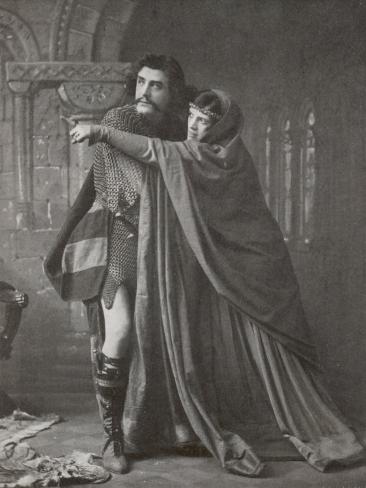
Lady Macbeth has offically gone insane by the end of the story. She sees blood on her hands all the time and refuses to be left in the dark. This shows the guilt of killing King Duncan and the servants, for she cannot was the blood in her mind. She is forever scarred with the memory of killing him. And after wishing to be more evil and dark, she is afraid of the darkness and always wants lights near her.  Meanwhile, Malcolm and the English Army have met up with Scottish rebels of Macduff's in the Birnam Woods and are getting ready to attack Dunsinane. The army decides to disguise themselves with the woods to make a sneak attack. As they move in with the camouflage, they are spotted and the news is brought to Macbeth. It is described as the woods are moving towards the castle. Macbeth is astonished and is worried the witches tricked him. Lady Macbeth dies of unkown causes from her insanity, possibly a suicide. Once Macbeth hears, he mourns for roughly 3 minutes, wishing she would have died later so he could mourn her at another time. The shows Macbeth's attitude about his life at the moment. He does not care much more and sees it as meaningless. As his own troops begin to turn on him, he has no other choice but to stay and fight with bravery. The irony of him seeming brave comes back to his cowardice in killing Duncan, Banquo and Macduff's family. After killing the young Siward. He finally runs into Macduff, whom he refuses to fight because he has killed so many of his family members. We find out that Macduff was actually "untimely ripped" from his mother-- he was born of a cesarian section. This fulfills two apparitions in one. Macduff is not born of a woman and the witches said to fear him. Macbeth has now given up, feeling tricked by the witches. Really though Macbeth was naieve towards the witches and did not understand he was digging his own grave. Nonetheless they fight, and Macbeth is slained and Malcolm becomes king. In the beginning of the story, the witches ask a lady for some chestnuts and she refuses to share. In punishment they said they would torture her husband. Could Lady Macbeth be the reason Macbeth was tormented by the witches slowly in leading to death? These are questions not answered by the story. Possibly because you must look deeper in. Another detail noticed is Shakespeare's familiarity with the Greek and Roman gods and goddesses and even Christianity. He mentions Neptune, Hecate and Jesus. The change in attitudes of both Lady Macbeth and Macbeth flip flop through the story. Lady Macbeth was seen as fearless and evil in the beginning and Macbeth was more honest and uneasy about being evil. By the end, Macbeth was cold-blooded and Lady Macbeth was so traumatized by all of the evil crimes committed by Macbeth, that she was believed to have taken her own life.

Act IV of Macbeth


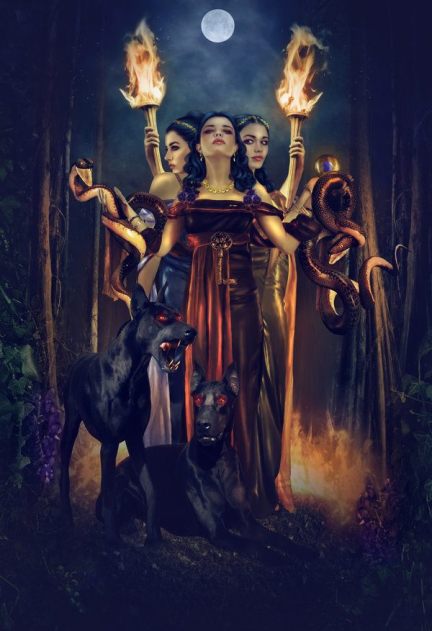
In the beginning of Act IV, Macbeth meets with the witches once more while they are making a potion to get an update on his future. This time, he speaks with more arrogance, calling the witches "hags" and other curses. The king is exposed to three aparrations that state three different dangers. He will not be dethroned until the Birnam Woods move towards the castle of Dunsinane, a man born of woman can not hurt him, and to fear Macduff. Macbeth believes he is safe because no man is not born of a woman, and woods cannot move. But he hears about Macduff and becomes cautious about him. After recieving news from Lennox that Macduff has traveled to England in search for Malcolm, Macbeth is enraged and decides to take it out on his family. He hires murderers again to do his dirty work and go and kill his wife and children. It is clear that Macbeth does not think twice or contemplate his decisions anymore because he wasted no time in trying to get at Macduff for 'betraying' him. While this is happening Macduff finds Malcom in England. He is persuading Malcolm to come back, but Malcolm feels he is being set up, so he tests Macduff's loyalty-- claiming he would be a much worse king than Macbeth. Shortly after, Macduff tells Malcolm they must stand up and fight for their homeland back, so they plan to build an army of rebels and attack Macbeth. Ross the messenger of the story, informs Macduff that his family has been murdered and Macduff loses it. Macbeth has clearly become a cold blooded monster who is only concerned about his own safety and power which reveals the irony of what he was at the beginning of the story.

Sunday, March 1, 2015

Act III of Macbeth

     
395655_10150460228851962_427400950_n
     Banquo hopes that if what the witches told Macbeth actually came true, then he hopes his sons such as Fleance will become king as well. Although the death of King Duncan brings his sons closer to being king, Banquo's loyalty causes him to feel upset at the loss of his leader. It is clear that Banquo is stuck in between two hard places, with two men he has possessed trust and respect for in Macbeth and King Duncan. Macbeth begins to get paranoid and his guilt begins to consume him and Lady Macbeth can see it as well and is worried. Now that the king has been taken out, Macbeth seeks to take out the source of what the witches said the future kings would come from-- Banquo. The new king hires murderers to kill Banquo and his son Fleance but does not tell Lady Macbeth anything about it. I am starting to see that Macbeth has become greedy and selfish with his power. He is not satisfied with what he already has so he wishes to take out any source of power that can contest against him. Banquo is killed while riding horses with Fleance, fortunately Fleance escapes and he is not heard for the rest of the scene. The murderers return to give Macbeth the news about Fleance's escape but the success in killing Banquo. Macbeth knows eventually Fleance will be a threat to him but not at this point in time. As the feast begins Macbeth sees the ghost of Banquo walk into the room and sit in a seat. The guilt again has consumed Macbeth and forces him to go crazy in front of all of the lords and servants. He turns cold at the sight of the ghost, for it is the most horrific thing he can possibly see. He would rather see a "russian bear" or even an "armed rhinoceros", but not the ghost of Banquo. After dinner Lady Macbeth and her husband talk about what has been driving Macbeth so crazy. He admits that he is too deep in the "river of blood" to turn back. He has killed too many men to try and become good. He plans to carry out many more crimes and not think twice about them and just do them. His excuse for his weird moods is that he is a begginner at committing crimes, so he must get used to being cold blooded. The ending of this scene (Scene 4) can help us understand that Macbeth's attitude and demeanor is beginning to change. He is turning into a cold blooded killer that does not reevaluate his actions anymore. If he thinks too much about something, he feels he is being sensitive. In the following scene, Hecate confronts the witches about what they have been doing for Macbeth without her permission. She believes Macbeth is selfish and spoiled and does not deserve having his future be told for he ony cares about himself. She states that, "security is mortal's chiefest enemy". Macbeth has become over confident with his power and is abusing it. Hecate could be forshadowing that basically Macbeth has bit off more than he can chew and is fixing to pay for using taking advantage of the witches.

Friday, February 27, 2015

Act II of Macbeth


 In the four scenes of Act II, it can be inferred that Macbeth has let guilt and his own wife provoke him to killing King Duncan. Not only did he kill Duncan, he killed his two servants in fear that they saw that the two had seen the murder. Without Lady Macbeth, the murder would have been botched. She went back and fixed the daggers in the servants' hands to make it seem like they killed King Duncan. I see this as a big twist, because in the beginning of this story Macbeth is seen as one of the bravest and most loyal fighters to King Duncan. Now he has deceived him and even become cowardly framing others to make it look like they killed him. Although Macbeth does admit to Macduff he was the one who killed the servants, he lies about the reason he did claiming he was angry because they killed the King which they didn't. The duo of Lady Macbeth and the Thane of Cawdor as well as Glamis, have turned evil and will stop at nothing until all interfering assets are out of the way. The term, "foul is fair and fair is foul" can have an example just as this one. The fact that Macbeth conceived an idea to take out the king for his power delighted him. Other the other end, the king would see that as very evil. So in that exact case, what is considered fair is foul and what is seen as foul is fair.  It seems as though Shakespeare parallels the weather to the event of King Duncan being killed. Ross describes the sky as having an "unnatural darkness", although the sun was out, it looked as though it is nighttime. Several unusual events began to happen. Like horses began to eat each other, as well as an owl eating a hawk. It is though Macbeth becoming king is not natural and should not happen. Macbeth seems to blow the the witches' predictions out of line every time they speak to him. He was told he would be king, but the witches did not specifically say to kill King Duncan and it will happen. He let the desire of gaining all of this power by being king take over his mind, forcing him to commit murder on the king. In my opinion, had Lady Macbeth not provoked Macbeth so much into killing King Duncan, Macbeth could have potentially avoided all of this trouble.

Tuesday, February 24, 2015

Act I of Macbeth (Pt.3)


After reading and analyzing the final three scenes of Act I (Scenes 5,6 and 7), I have began to see the cold heart and evil that Lady Macbeth possesses. She asks for absurd things like to be "unsex[ed]" and have cold blood run through her veins. She wants the masculine characteristics of a man so she can commit more evil acts. She is very convinced Macbeth can make himself king of Scotland. So she feels she should do whatever it takes to make him king and herself queen. It seems as if the tables have turned in a certain way. Macbeth is afraid to kill King Duncan because of the way he treats him, and Lady Macbeth questions Macbeth if he is a man or not. She becomes very selfish and tries controlling her husband.  It turns into an obsession as if she is a little insane. The witches have in a way dictated Macbeth's life at this point, by predicting his future. My question is, why is Macbeth so concerned about being king right now if he will be king eventually?

Tuesday, February 17, 2015

Act I of Macbeth (Pt.2)


  Getting into scene two,three, and four of Act I, I am starting to understand the type of person Macbeth is. He is loyal to his homeland and king and will fight to preserve the trust and courage he possesses for them. After finishing his time in battle defeating Macdonwald and exectuing the thane of Cawdor, he is confronted by three witches. The thane of Glamis is told by the three "hags" that he will soon be thane of Cawdor, after killing the original thane. He is later named thane of Cawdor and is amazed at the prophesy being true. The last predidiction of being King of Scotland astounds Macbeth. Banquo is told he will not be king, but his children such as Fleance will be. Macbeth begins plotting to kill King Duncan. I believe once Macbeth found out he was thane of Cawdor, he was going to do whatever it took to take the throne as king. Emotions begin to change for Macbeth throughout the following scenes after finding out Duncan's son, Malcolm will be the heir to the throne after he is gone. It is clear that there will be some sort of twist in the story soon, where exactly though, is unknown.

Monday, February 9, 2015

Act I of Macbeth


    Works by William Shakespeare are an important part of my high school curriculum. We had read plays such as A Midsummer's Nights Dream, as well as Romeo and Juliet. These two works introduced me into the writing style and grammar of Shakespeare. Over time it has become easier for myself to comprehend his writing. My college English class has recently began to read Macbeth, a play about a British thane who finds out he is destined to become King of Scotland. Macbeth is constantly plagued with fear and stress of carrying out this task.
    After reading all of Act I of the play Macbeth, I have began to get a grasp on how to understand William Shakespeare's writing.  Scene  1 consists of the three witches meet to discuss a confrontation to Macbeth after he finishes his time in battle is finished. The conversation opens with the sentence, "Fair is foul, and foul is fair".  The witches could be paralleling this phrase to life itself. For example the yin yang. A yin yang possesses bad in the good and good in the bad. The idea of 'foul' being 'fair' and 'fair' being 'foul', could be explaining that every good situation possesses bad and vice versa.